








WHO
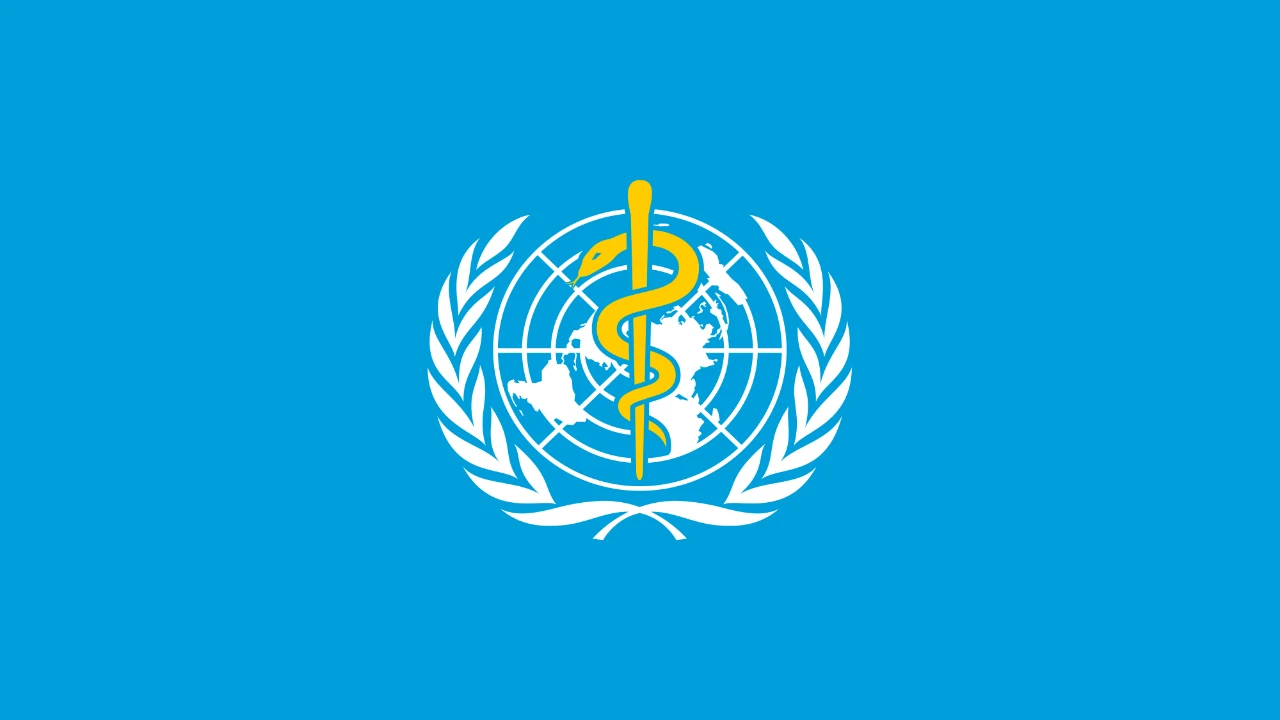
The World Health Organization flag displays the WHO emblem in white against a light-blue background associated with the United Nations. The emblem combines the UN's world map and olive branches with a staff and serpent, a traditional symbol of medicine and healing. Together, these elements represent international cooperation and the organization's commitment to health worldwide. The flag is a recognizable symbol of the WHO's role in coordinating public-health efforts across countries.
The World Health Organization was established on 7 April 1948, the date its Constitution entered into force. It was created as a specialized agency of the United Nations to coordinate international public-health cooperation after the Second World War. Over the decades, WHO has supported disease surveillance, vaccination, health standards and emergency responses. One of the most notable public-health achievements associated with international cooperation coordinated by WHO was the global eradication of smallpox, officially declared in 1980. WHO has also played major roles in polio eradication efforts, responses to HIV/AIDS and other infectious diseases, and international coordination during health emergencies, including the COVID-19 pandemic.
• Established: 7 April 1948
• Headquarters: Geneva, Switzerland
• UN status: Specialized agency
• World Health Day: 7 April
• Governing forum: World Health Assembly
• Executive Board: Supports implementation of Health Assembly decisions
• Main fields: Disease prevention, health systems and emergency response
• International Health Regulations: Framework for managing certain cross-border public-health risks
• Historic milestone: Smallpox eradication declared in 1980
Key Facts
• WHO publishes international health guidance and technical standards.
• Its regional structure includes six regional offices.
• WHO coordinates with governments, researchers and other health partners.
• The organization's emblem includes the UN symbol and a traditional medical staff and serpent.
The World Health Organization is the United Nations specialized agency for international public health. It works with countries and partners to promote health, prevent disease, strengthen health systems and respond to health emergencies. WHO develops evidence-based guidance, supports disease monitoring, coordinates technical assistance and helps countries improve access to essential health services. Its work spans communicable and noncommunicable diseases, maternal and child health, vaccination, environmental health and emergency preparedness. WHO recommendations inform national policies, but governments remain responsible for implementing health measures within their jurisdictions.
Discover World Best Flags
Premium Quality Flag Media in Multiple Formats
Explore our collection of flags available in GIF, FHD, and stunning 4K video formats, perfect for educational, commercial, or personal projects.
GIF Format
Animated flag GIFs perfect for websites, presentations, and social media. Lightweight and compatible with all platforms.
FHD Video
High-definition flag videos with crisp details and smooth motion. Ideal for professional presentations and digital displays.