





Benelux
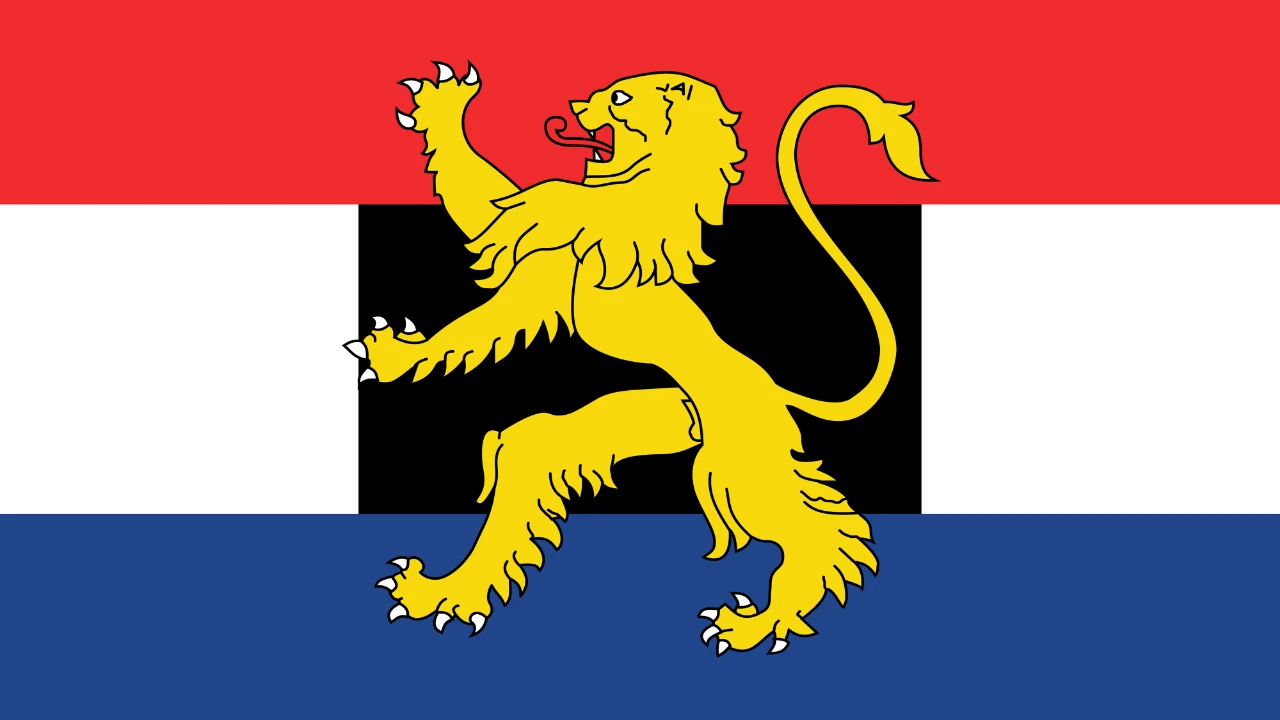
The Benelux flag is a symbol of cooperation among Belgium, the Netherlands and Luxembourg. Its familiar design combines elements associated with the three countries, including a black lion and the colours red, white and blue. It expresses their shared commitment to cross-border partnership while recognising each country's distinct identity. The flag is widely used to represent Benelux cooperation; it should not be confused with the national flags of the three member states or treated as a separate national flag. The Benelux Union itself is an intergovernmental partnership, not a sovereign country.
Benelux cooperation began during the Second World War. In 1944, the governments of Belgium, the Netherlands and Luxembourg, then in exile, signed a customs convention to facilitate trade after the war. The customs union entered into force in 1948 and helped establish a practical model for European economic integration. The three countries signed the Treaty establishing the Benelux Economic Union in 1958, which entered into force in 1960. The partnership progressively expanded beyond customs and trade to include cross-border mobility, economic cooperation and joint action on public issues. A new Benelux treaty was signed in 2008 and entered into force in 2012, modernising the partnership under the name Benelux Union. Today, it offers a framework in which three neighbouring countries can test and coordinate solutions to shared challenges.
• The name 'Benelux' combines the opening letters of Belgium, the Netherlands and Luxembourg.
• The three countries signed a customs convention in 1944, before the end of the Second World War.
• The Benelux customs union began operating in 1948.
• The Benelux Economic Union treaty was signed in 1958 and took effect in 1960.
• A renewed treaty, effective from 2012, established the modern Benelux Union framework.
• Benelux cooperation helped pioneer forms of economic integration later developed across Europe.
• The countries coordinate practical cross-border issues, including mobility, security and sustainability.
• The Benelux General Secretariat is based in Brussels, Belgium.
Key Facts
• Full name: Benelux Union
• Member countries: Belgium, the Netherlands and Luxembourg
• Main institutional base: Brussels, Belgium
• Historical roots: 1944 customs convention
• Modern treaty framework: In force since 2012
• Main purpose: Closer cooperation across shared borders and policy areas
The Benelux Union is an intergovernmental framework connecting Belgium, the Netherlands and Luxembourg. Its purpose is to make cooperation across their borders easier and more effective, while allowing each country to retain its own institutions and national responsibilities. The Union focuses on three broad areas: the internal market and economic cooperation; sustainable development; and justice and home affairs. Practical work may involve reducing obstacles to cross-border business and employment, improving mobility, coordinating environmental and energy initiatives, and supporting cooperation between public authorities on security and related issues. Its General Secretariat in Brussels helps coordinate joint activities and follow-up. Benelux cooperation also provides an opportunity for neighbouring countries to pilot initiatives that may be useful in wider European cooperation.
Discover World Best Flags
Premium Quality Flag Media in Multiple Formats
Explore our collection of flags available in GIF, FHD, and stunning 4K video formats, perfect for educational, commercial, or personal projects.
GIF Format
Animated flag GIFs perfect for websites, presentations, and social media. Lightweight and compatible with all platforms.
FHD Video
High-definition flag videos with crisp details and smooth motion. Ideal for professional presentations and digital displays.