





Antarctic Treaty
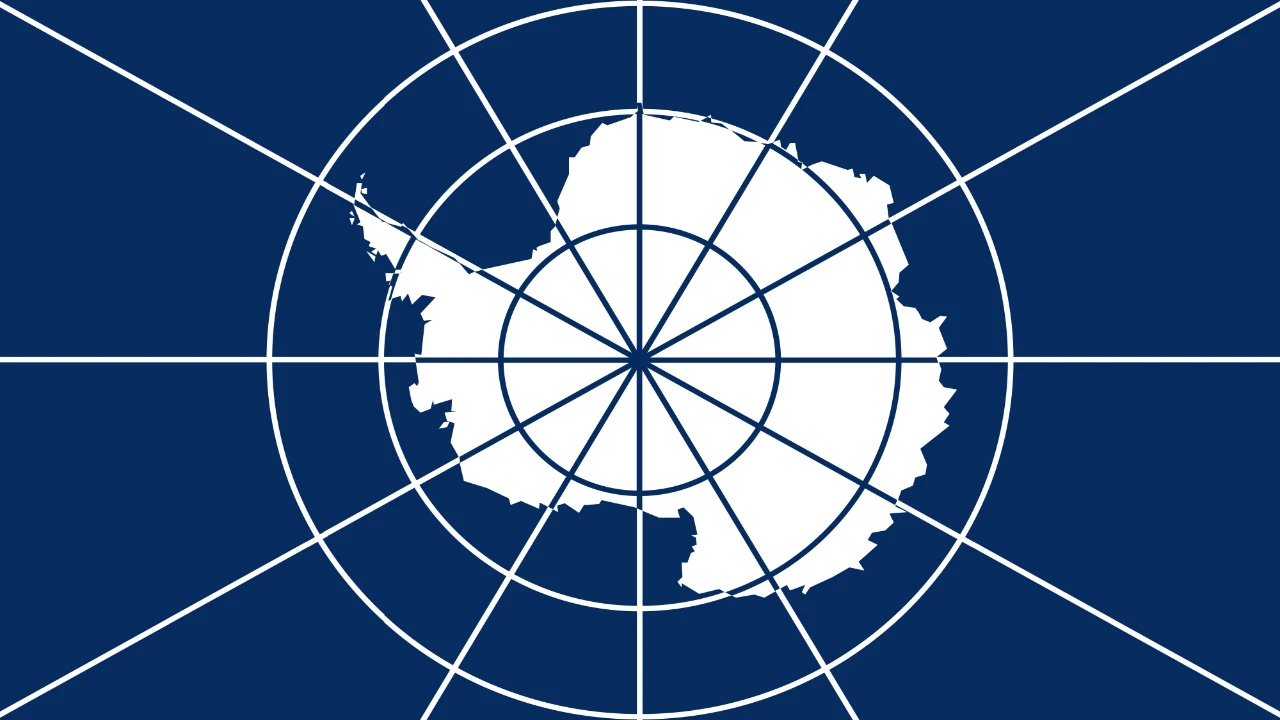
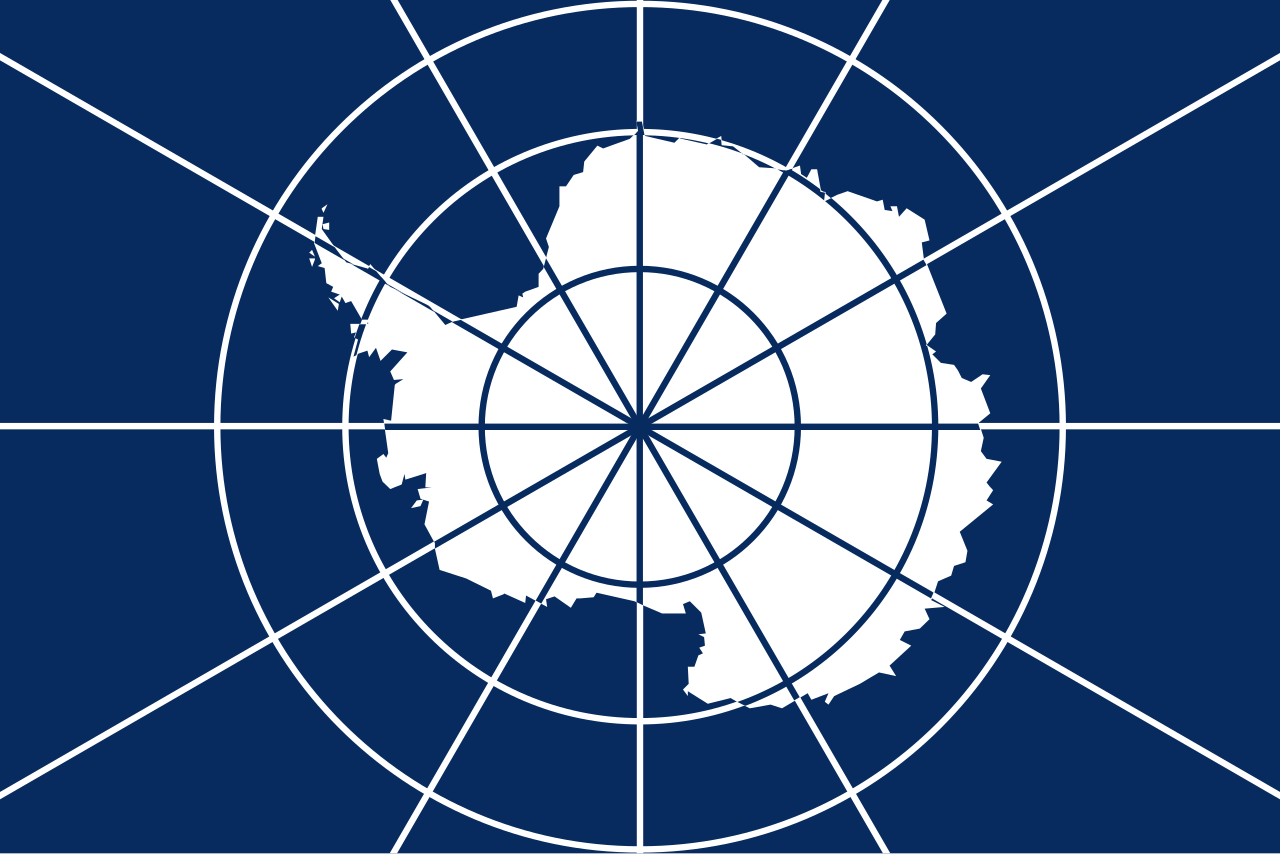
The Antarctic Treaty emblem is a symbol of international cooperation in Antarctica rather than a national flag. Its blue field and white design feature a map of Antarctica within a circular grid of latitude and longitude lines. The continent at the centre reflects the Treaty’s geographical focus, while the surrounding lines convey its international scope. The emblem is associated with the Antarctic Treaty System, which brings countries together to maintain Antarctica as a place for peace and scientific investigation. It should not be confused with unofficial designs proposed as flags for Antarctica.
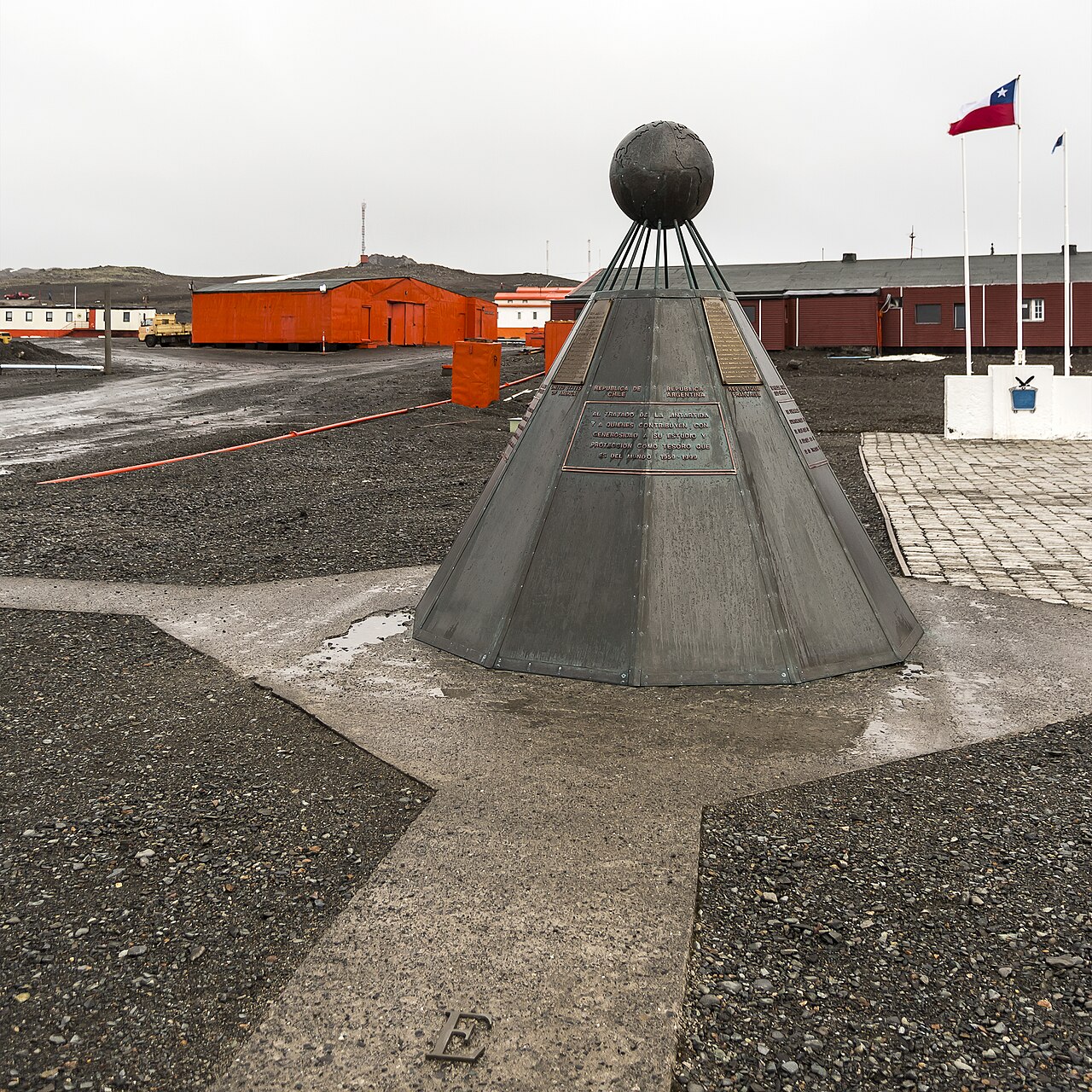
The Antarctic Treaty was signed in Washington, D.C., on 1 December 1959 by 12 countries active in Antarctic research during the International Geophysical Year of 1957–1958. It entered into force on 23 June 1961. The Treaty establishes that Antarctica is to be used for peaceful purposes, safeguards freedom of scientific investigation, encourages the exchange of scientific observations and results, and provides for inspections. It also sets aside disputes over territorial sovereignty claims without requiring countries to abandon their positions. Over time, further agreements developed the wider Antarctic Treaty System. The 1991 Protocol on Environmental Protection, which entered into force in 1998, designated Antarctica as a natural reserve devoted to peace and science and prohibited mineral resource activities other than scientific research. The Antarctic Treaty Consultative Meetings provide a forum for parties to discuss the continent’s governance and protection.
• Original signatories: 12 countries signed the Treaty in 1959.
• Signed: 1 December 1959, Washington, D.C.
• Entered into force: 23 June 1961.
• Treaty area: South of 60° south latitude, including ice shelves.
• Core principle: Antarctica is reserved for peaceful purposes.
• Scientific cooperation: Parties promote research and the exchange of scientific findings.
• Territorial claims: The Treaty preserves existing positions without settling competing claims.
• Environmental protection: The 1991 Environmental Protocol entered into force in 1998.
• Mineral resources: Activities relating to mineral resources, other than scientific research, are prohibited under the Environmental Protocol.
Key Facts
• Governing framework: Antarctic Treaty System (ATS).
• Consultative forum: Antarctic Treaty Consultative Meeting (ATCM).
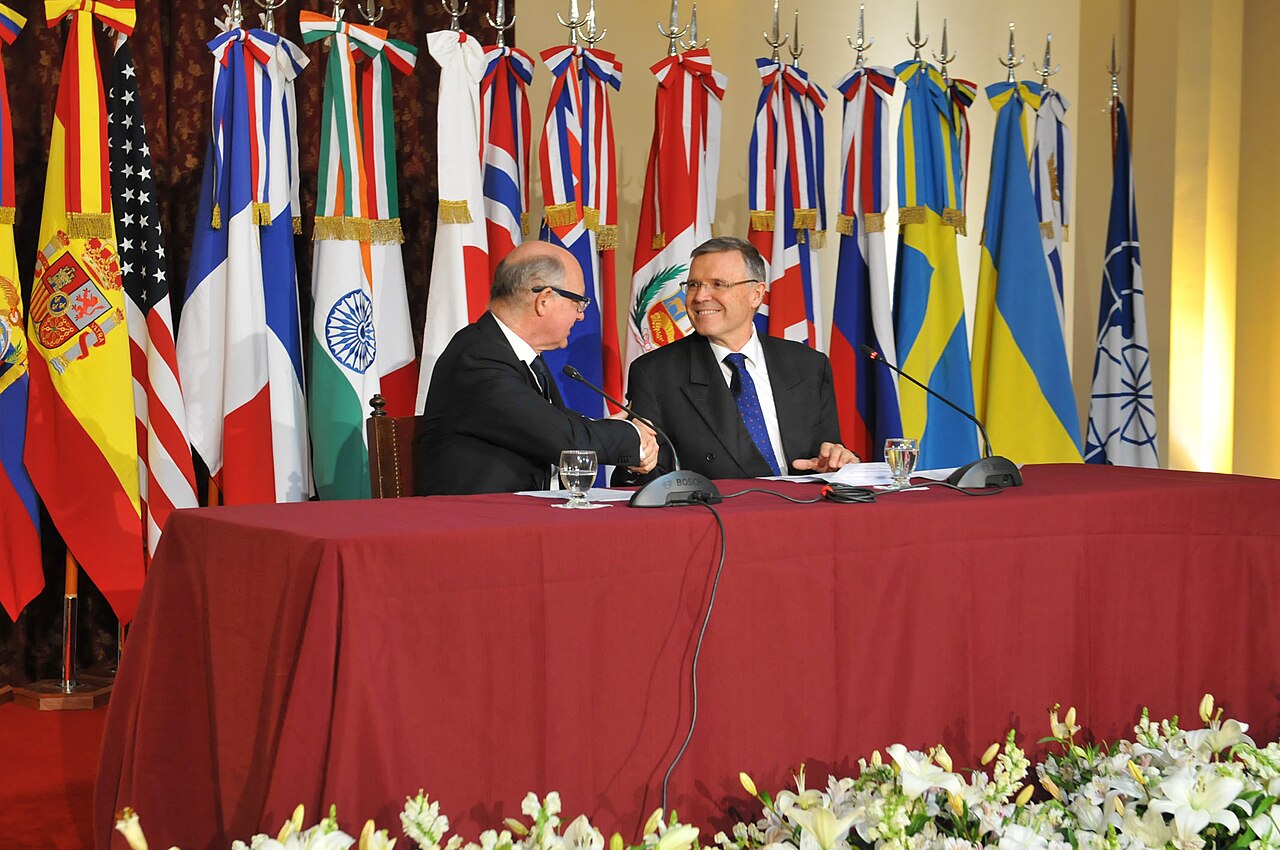
• Secretariat: Buenos Aires, Argentina.
• International status: Antarctica is not a sovereign country and has no universally recognised national flag.
The Antarctic Treaty is an international agreement, not a conventional organisation with a single membership-based governing authority. Together with related measures and agreements, it forms the Antarctic Treaty System (ATS), the framework for cooperation in Antarctica. Its central aims are to prevent military conflict, protect scientific research and support responsible stewardship of the Antarctic environment. The Treaty prohibits military measures such as establishing bases for military purposes and testing weapons, while allowing the use of military personnel or equipment for scientific research or other peaceful purposes. It also prohibits nuclear explosions and the disposal of radioactive waste in Antarctica. Consultative Parties meet through the Antarctic Treaty Consultative Meeting (ATCM) to exchange information and adopt measures concerning activities in the region. The Antarctic Treaty Secretariat, based in Buenos Aires, supports these meetings and the exchange of official information. Environmental protection is strengthened by the Protocol on Environmental Protection and its annexes, which address matters such as environmental impact assessment, conservation of wildlife, waste management and protected areas. The Treaty System makes Antarctica a distinctive example of sustained international cooperation in science, peace and conservation.
Discover World Best Flags
Premium Quality Flag Media in Multiple Formats
Explore our collection of flags available in GIF, FHD, and stunning 4K video formats, perfect for educational, commercial, or personal projects.
GIF Format
Animated flag GIFs perfect for websites, presentations, and social media. Lightweight and compatible with all platforms.
FHD Video
High-definition flag videos with crisp details and smooth motion. Ideal for professional presentations and digital displays.